What Happened During The Artemis II Wet Dress Rehearsal?
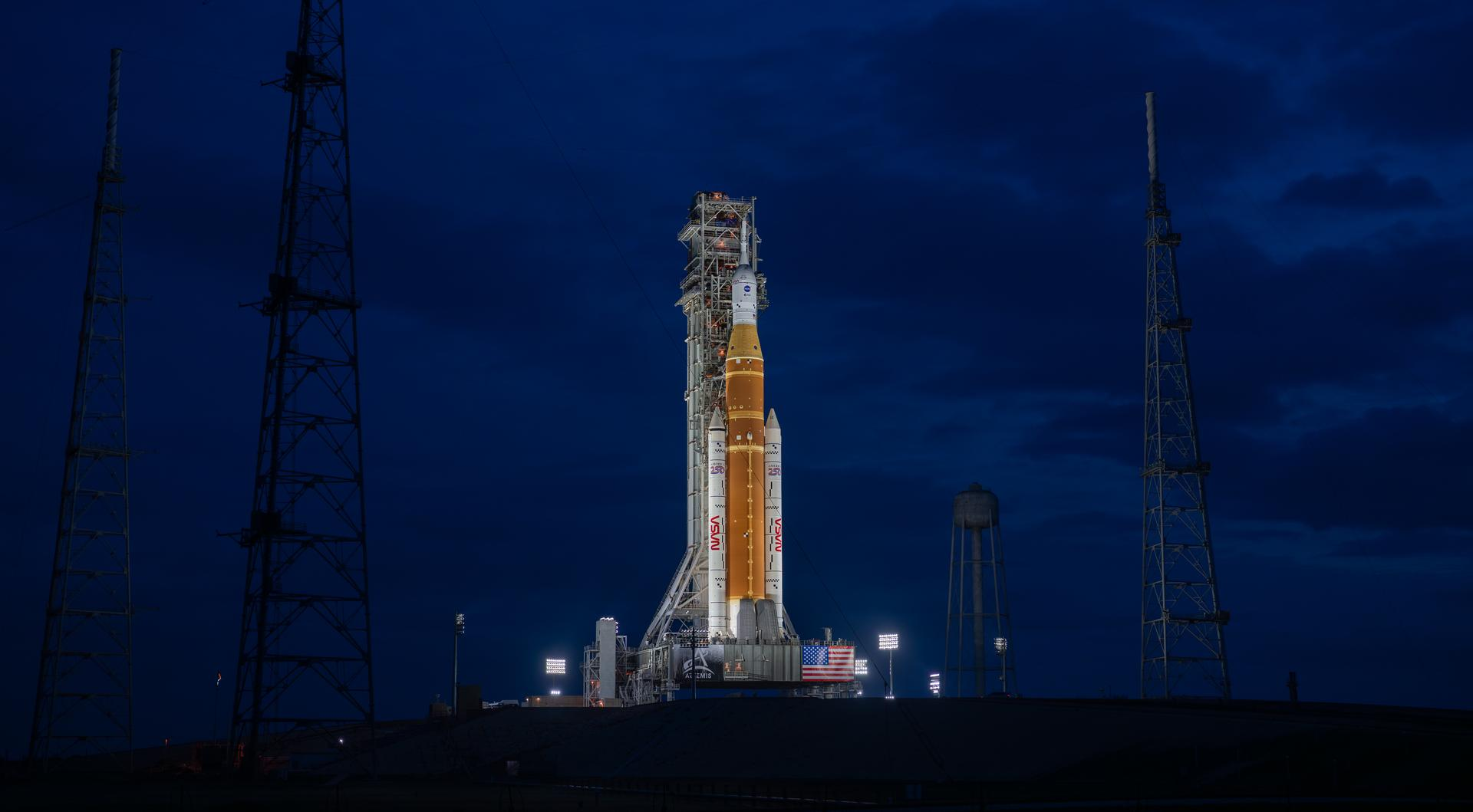
NASA's first date to attempt the WDR was scheduled for Jan 31st. However, unexpected weather on the Space Coast, including low temperatures and high winds forced the WDR test to shift to the right by a couple days.
The countdown for this test, and for the mission, started at approximately L-49 hours, when controllers would have started to pour into mission control to begin launch activities. Over the next day or so, teams began filling up water tanks as well as powering up the entire launch vehicle. As the clock ticked down to the L-12 hour mark, briefings and polls took place to decide whether it is safe to proceed to tanking operations. These discussions include the typical Go/No-Go poll for tanking, as well as briefings on weather and the tanking procedures. The Go for tanking was given at approximately 11:25am EST. Following this, chilldown of the core stage would begin, followed by LH2 (liquid hydrogen – the rocket's fuel) and LOX (liquid oxygen – the rocket's oxidiser) slow fill. Before we continue this brief lookover of the count, let's establish the 6 phases of tanking for SLS:
Chilldown – The chilldown phase is important when using cryogenic propellants. This involves slowly filling the lines and subsequent systems with the cryogenic propellants to thermally condition them for tanking. This is done to avoid thermal shock to the systems involved.
Slow fill - Slow fill is similar to the chilldown phase. It's done to protect the large tanks on the vehicle from thermal shock due to the rapid changes in temperature. It involves slowly flowing propellant into the tanks, and once the tanks are conditioned appropriately, the next phase begins.
Fast fill - This is the phase of tanking where things tend to speed up. Fast fill flows the propellants into the vehicle at their maximum capacity; for SLS that’s roughly 1,300 gallons of LOX and 8,000 gallons of LH2 per minute.
Topping – Topping of the tanks makes absolute sure that all tanks on both the core stage and ICPS upper stage are fully full. This is crucial for maintaining the correct fuel levels in the tanks ahead of the next phase.
Replenish - The replenish phase ensures that the vehicles' tanks remain at flight levels. Cryogenic propellant eventually starts to boil off after a certain amount of time due to the extreme temperatures. Replenishing these boiloffs is essential to making sure the vehicle is at flight level.
Detanking - On launch day, detanking doesn’t occur unless there’s a scrub. But for the WDR test, detanking is a complex yet important part of the process. This phase is self-explanatory; it involves draining the propellants back through the fill/drain valves and safely off the vehicle.
Once slow fill of the core stage was underway, all was going swimmingly. However, once fast fill kicked in, an LH2 leak arose, the same leak that haunted Artemis I’s launch campaign numerous times. The leak occurred through the Tail Service Mast Umbilical (TSMU) approximately 1 hour into core stage loading and exceeded the 16% limit, causing a pause in LH2 loading. Based off of the panel's answers in the post-WDR conference, the leak occurred in the TSMU's cavity. Other potential leak causes could be damaged seals and connections, according to John Honyecutt. To combat this, teams conducted a stop flow & revert procedure, which then saw the leak come down, and they also used a contingency procedure from Artemis I, where they let the seal warm up before restarting the flow of LH2. Once they were ready, they got back into fast fill of the LH2 core stage before the leak arose again.
Just before the leaks occurred, the ICPS upper stage began its chilldowns and got into LH₂ loading, which went smoothly. In fact, all tanks besides the core stage LH2 tank filled without any issues at all.
Eventually, the LH2 tank for the core stage was filled and entered topping mode before all tanks along the entire vehicle entered into the replenishing phase of tanking.
The next part of the WDR test was the closeout crew's work on Orion at L-4h40m. The closeout crew had an important task of configuring Orion and all access points for crew ingress operations. The first task was the checkouts and closure of the crew module hatch. This process involves cleaning and inspecting every millimetre in and around the hatch to ensure its airtight integrity, verify the crew modules' environmental control systems and make sure all mechanical and electrical components are secured before closure (per NASA's blog). During seal pressurisation checks on the counterbalance assembly, a valve in Orion's hatch pressurisation unintentionally vented, requiring extra time to be spent repressurising the counterbalance assembly. Following this is the Launch Abort System (LAS) hatch closure. The LAS hatch is the milestone that confirms the spacecraft is in flight configuration. Once all final checks were completed, the closeout crew then departed LC-39B, and teams were ready to assess when to head into terminal count.
At roughly 12:10am, teams entered the terminal count. Terminal count is where all final checks of systems on the rocket and ground are done, as well as crew access arm retraction. Unfortunately, the TSMU LH2 leak decided to come out to play again, causing an abort and termination of the count at T-5m15s.
Over the next few hours, teams safely began draining all propellant out of the vehicle, and pad access was reinstated. Due to the leak and count termination, Artemis II launch teams will have to conduct another WDR test. This has ruled out a February launch, with the earliest possible attempt being March 6th, NASA has not confirmed whether a rollback of SLS is needed; however, launch director Charlie Blackwell-Thompson said work can likely be done on the pad.
An unfortunate end to a mostly positive test, teams will have gathered loads of data, and I'm sure they will smash the next attempt. It's important to remember this pad has been inactive for just over 3 years, so issues are likely; this is why we test. As of right now there isn't a date given for WDR 2, so just be sure to stay tuned to NASA socials and here at TheWeeklySpaceman to be informed once a date is confirmed.
Read more about the Artemis II mission, including a dive into the vehicles used as well as the mission profile here:
SLS & Orion: https://www.theweeklyspaceman.com/articles/sls-and-orion
Artemis II mission profile: https://www.theweeklyspaceman.com/articles/artemis-ii-mission-profile
Thanks for reading!