The Weekly Rocket Report #64
02/09/2026-02/15/2026
Ricky Whitmore
Space Writer
Hello my friends and welcome back to The Weekly Rocket Report! We had a fairly busy week, and specifically a very busy Thursday, with 4 launches in one day! Let’s dive in and take a look shall we?
The week begins on Wednesday with an early afternoon launch from Falcon 9. The SpaceX rocket was carrying 24 satellites as part of Starlink Group 17-34. Following staging the rocket flew back to Earth and landed on the drone ship “Of Course I Still Love You” in the Pacific Ocean.
China kicks off our busy Thursday morning with a launch from Jielong 3. The rocket was carrying PRSC-EO2 plus 6 other rideshare satellites. The main payload, is an Earth Observation satellite on launched for SUPARCO the Pakistani space agency.
The next launch was quite a sight to behold, a Proton! This was the first launch of a Proton rocket in almost 2 full years. The payload, Elektro-L, is a Russian weather satellite launched from a snowy Baikonur Cosmodrome.
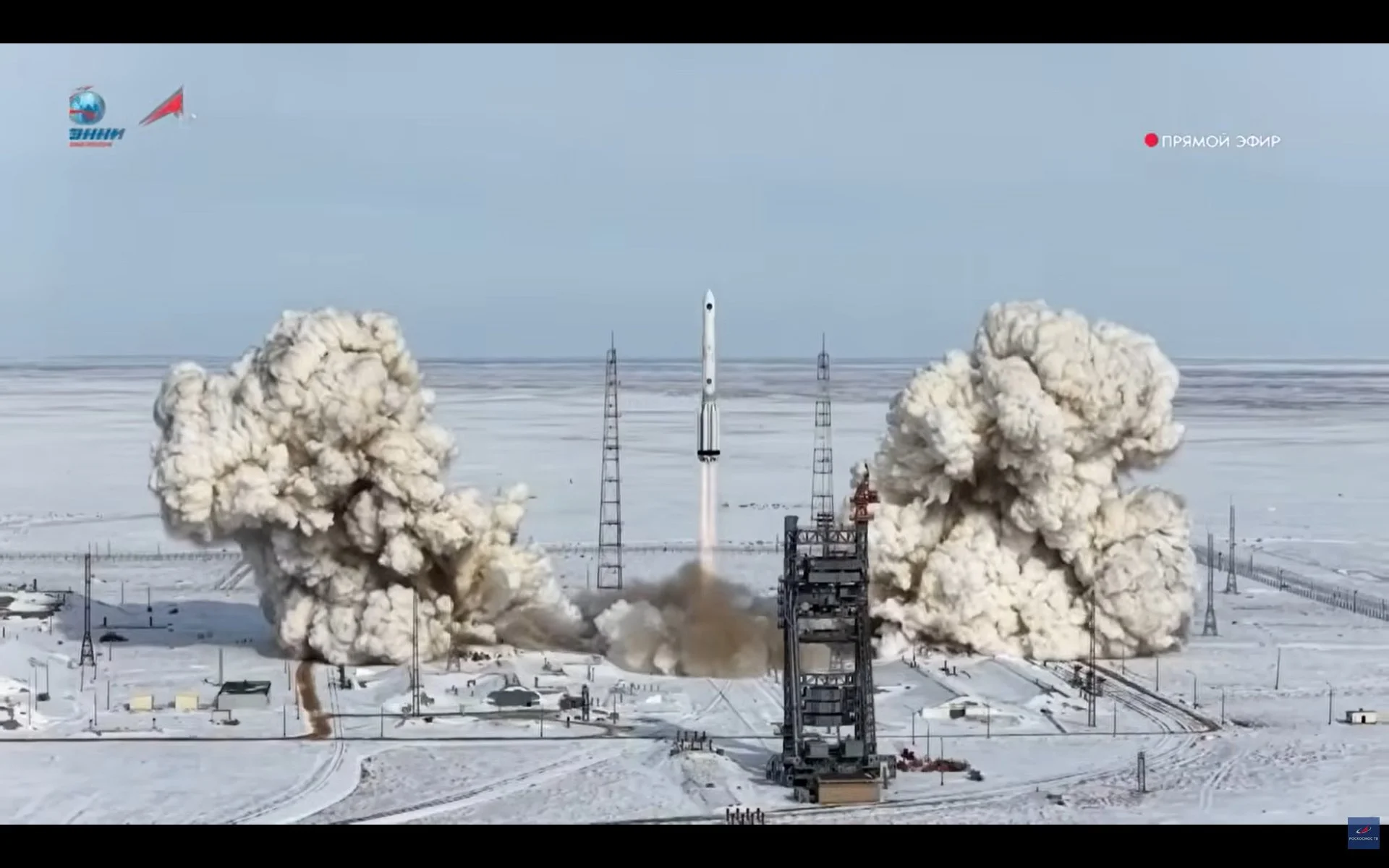
Proton-M launches Elektro-L. Photo Credit: Roscosmos.
United Launch Alliance is up next, with a launch from Vulcan VC4S, the first launch for this particular configuration. Vulcan was hauling USSF-87 (GSSAP 7&8), 2 space surveillance satellites operated by the US Space Command. During ascent one of the solid rocket boosters blew a nozzle, causing the rocket to enter a spiral. The BE-4 engines were able to correct the rockets trajectory, and Vulcan made it past SRB jettison. Once in space the BE-4s and the Centaur upper stage were able to make up for any shortcomings in thrust, and the payload was deployed to its target orbit, proving just how reliable BE-4 and Centaur can be. This is a similar issue that occurred on Cert Flight 2, a mission that was also successful despite SRB issues.
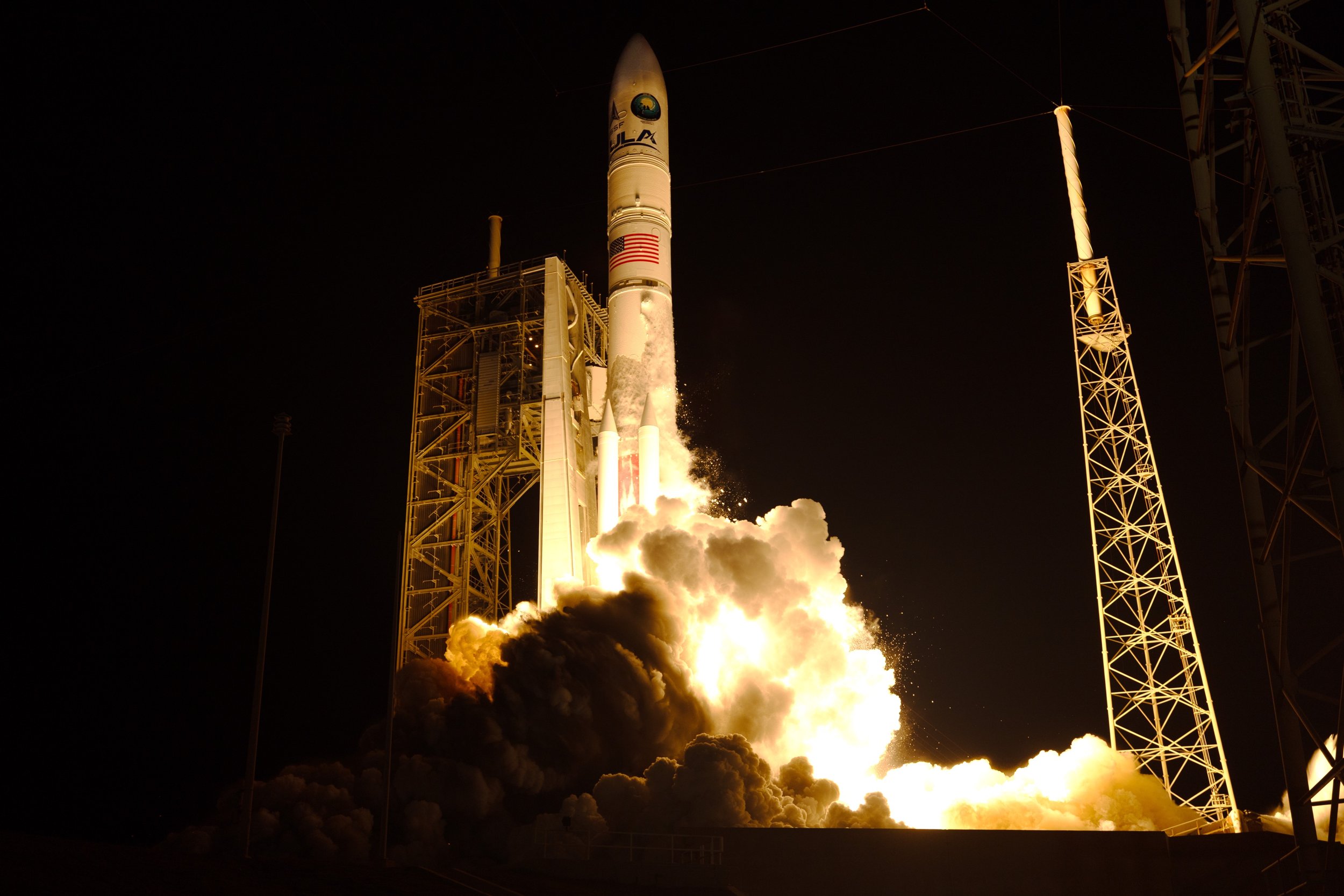
Vulcan launches USSF-87 (GSSAP 7&8). Photo Credit: United Launch Alliance.
The last flight Thursday morning came from Arianespace, and Ariane 6. This was the first launch of the Ariane 64 variant, sporting 4 solid rocket boosters. The payload was a set of 32 Amazon LEO (formerly Kuiper) satellites. All 4 of these launches Thursday took place before noon (EST) with Jielong 3 launching at 1:37AM, and Ariane 6 launching at 11:45AM. What a day indeed.
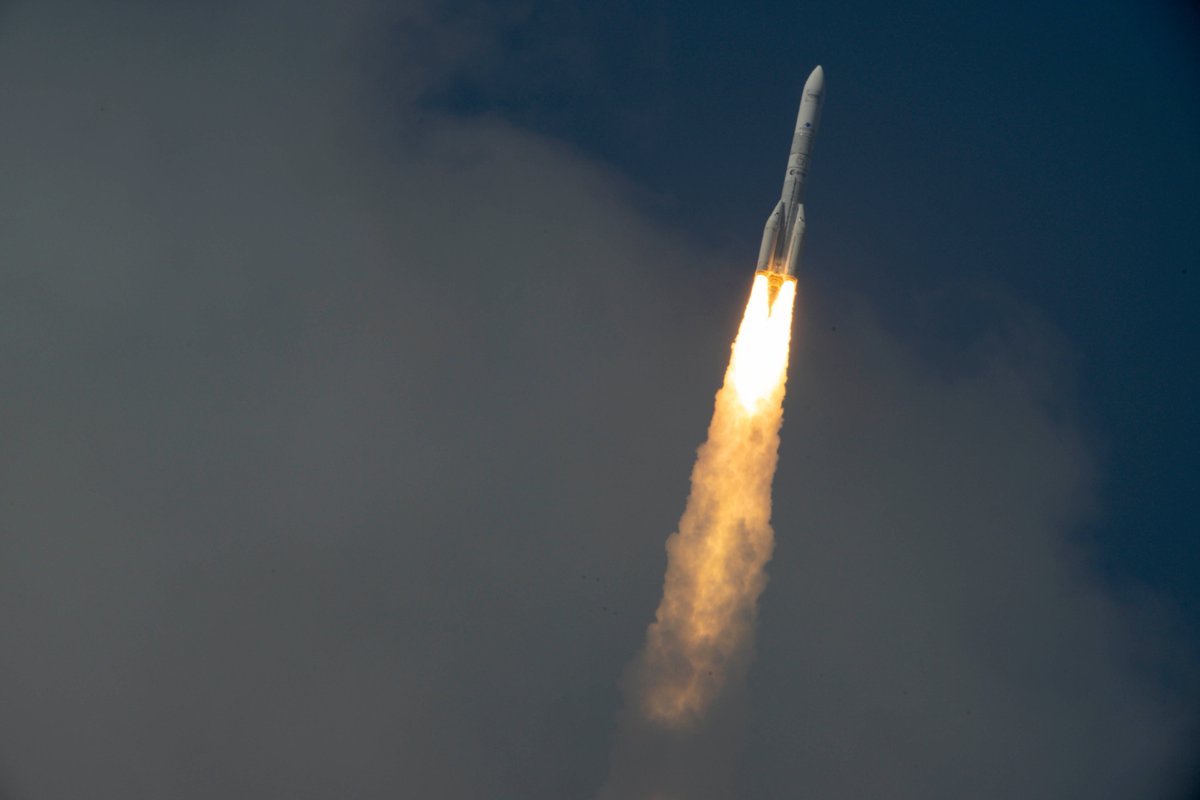
Ariane 6 launches Amazon LEO (LE-01). Photo Credit: ESA.
Moving to Friday now where SpaceX jumped back into the excitement with a crew launch. SpaceX Crew 12 lifted off from the Cape at 5:15AM, carrying much needed reinforcements to the ISS following an early return by Crew 11, leaving ISS operating with only 3 people. The team riding Falcon 9 and Dragon to orbit consisted of Jessica Meir, Jack Hathaway, ESA’s Sophie Adenot and Andrey Fedyaev of Roscosmos. Following stage separation the Falcon booster returned to land at LZ-40, the first landing at SpaceX’s newest booster landing zone.
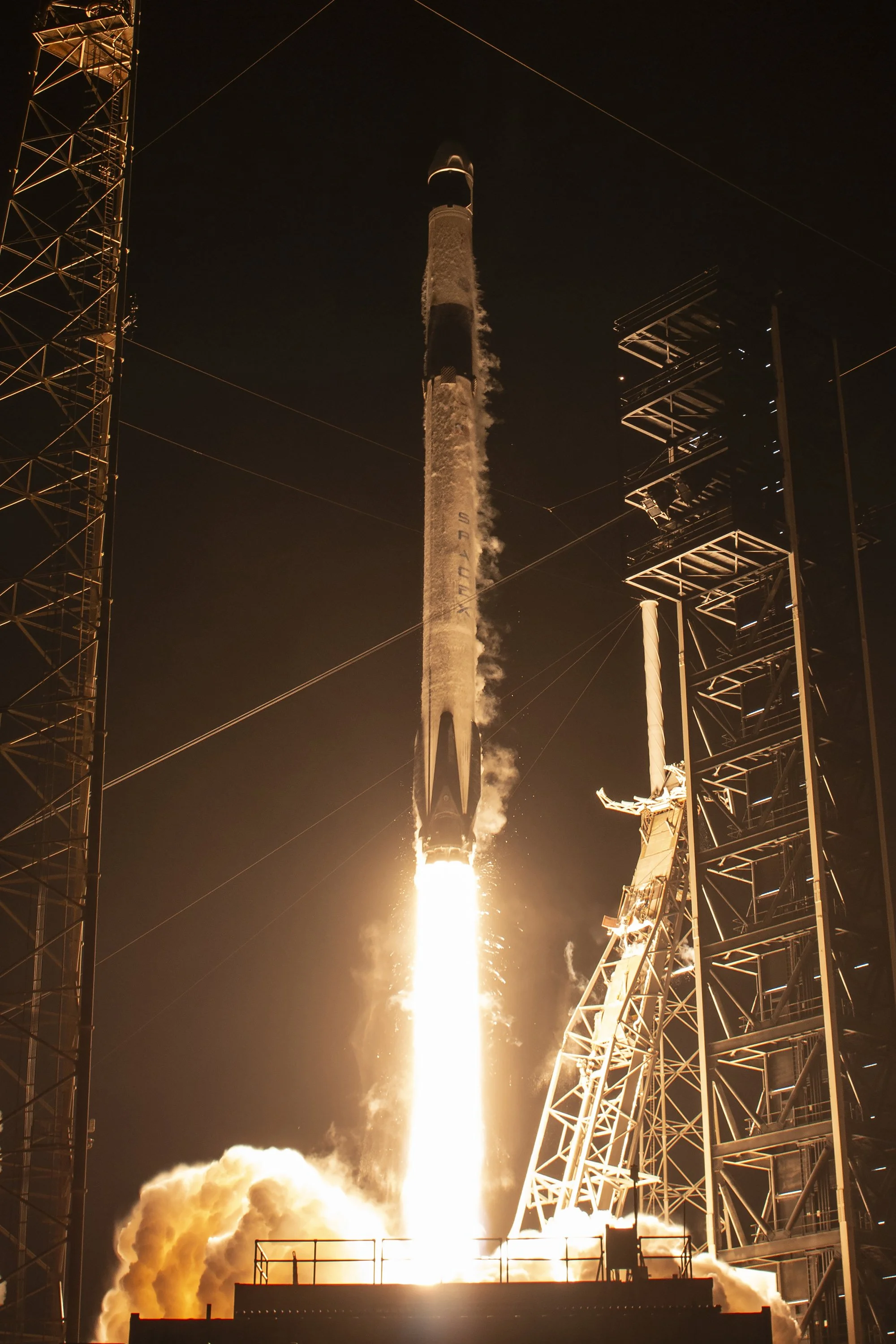
Falcon 9 launches SpaceX Crew-12. Photo Credit: SpaceX.
Finally to close out the week Saturday was a nice simple Starlink Mission. Falcon 9 carried 24 satellites to orbit as part of Starlink Group 17-13 from Vandenberg. Following stage separation its booster returned to Earth and landed down range on the drone ship “Of Course I Still Love You”.
Well there we have it everyone, didn’t I tell you Thursday was exciting? 4 launches, from 4 different rockets, in 4 different parts of the world in under 12 hours. What an exciting time we live in. Good to see SpaceX Crew 12 get off the ground to get ISS back up to standard operating capacity as well. Looks like a lot of Starlink coming up next week, but I do see a Firefly Alpha listed for Friday evening. Hopefully Alpha can break through what has been kind of a cold streak and hit orbit successfully. We will discuss that and more, on next week’s installment of The Weekly Rocket Report!
As always feel free to write to me at rickyew2112@gmail.com, or find me on X @Rickyew2112
Sic Itur Ad Astra
(Thus They Journey to the Stars)