The Weekly Rocket Report #60
01/12/2026-01/18/2026
Ricky Whitmore
Space Writer
Hello all and welcome back to a busy edition of The Weekly Rocket Report. There were 10 launches this week, in what ended up being a VERY busy week for the Chinese, with 6 launches in 7 days. Let’s break down the madness.
The week begins on Monday afternoon with a Falcon 9 launch from Cape Canaveral. Starlink Group 6-97 carried 29 satellites to orbit, and saw its booster return successfully, landing on the drone ship “Just Read The Instructions”.
The first of a busy Chinese launch week was the launch of Yaogan 50-01. The Chinese military satellite road a Long March 6A rocket to orbit, launching from the Taiyuan Launch Center.
Just one short hour later a Long March 8A lit its engines and blasted off from the Wenchang Launch Center. This rocket was carrying 9 satellites as part of SatNet LEO Group 18.
Back to the United States Wednesday afternoon for another Falcon 9 launch, this time launching Starlink Group 6-98. The 29 satellites were placed in orbit successfully and the 1st stage returned to Earth, touching down on the drone ship “A Shortfall of Gravitas”. Of note, this launch set a new pad turn around record for Falcon 9, with Starlink Group 6-97 and Starlink Group 6-98 launching from the same pad (SLC-40) roughly 45 hours apart.
Now we stay in China for a while, and our stay starts with the launch of a Long March 2C from the Jiuquan Launch Center. The payload, AISat 3A is an Earth observation satellite built and launched for the Algerian Space Agency.
The next launch was of Galactic Energy’s rocket Ceres 1S. The rocket carried Tianqi 37-40, 4 “internet of things” satellites. The rocket launched from an offshore site at the Haiyang Spaceport.
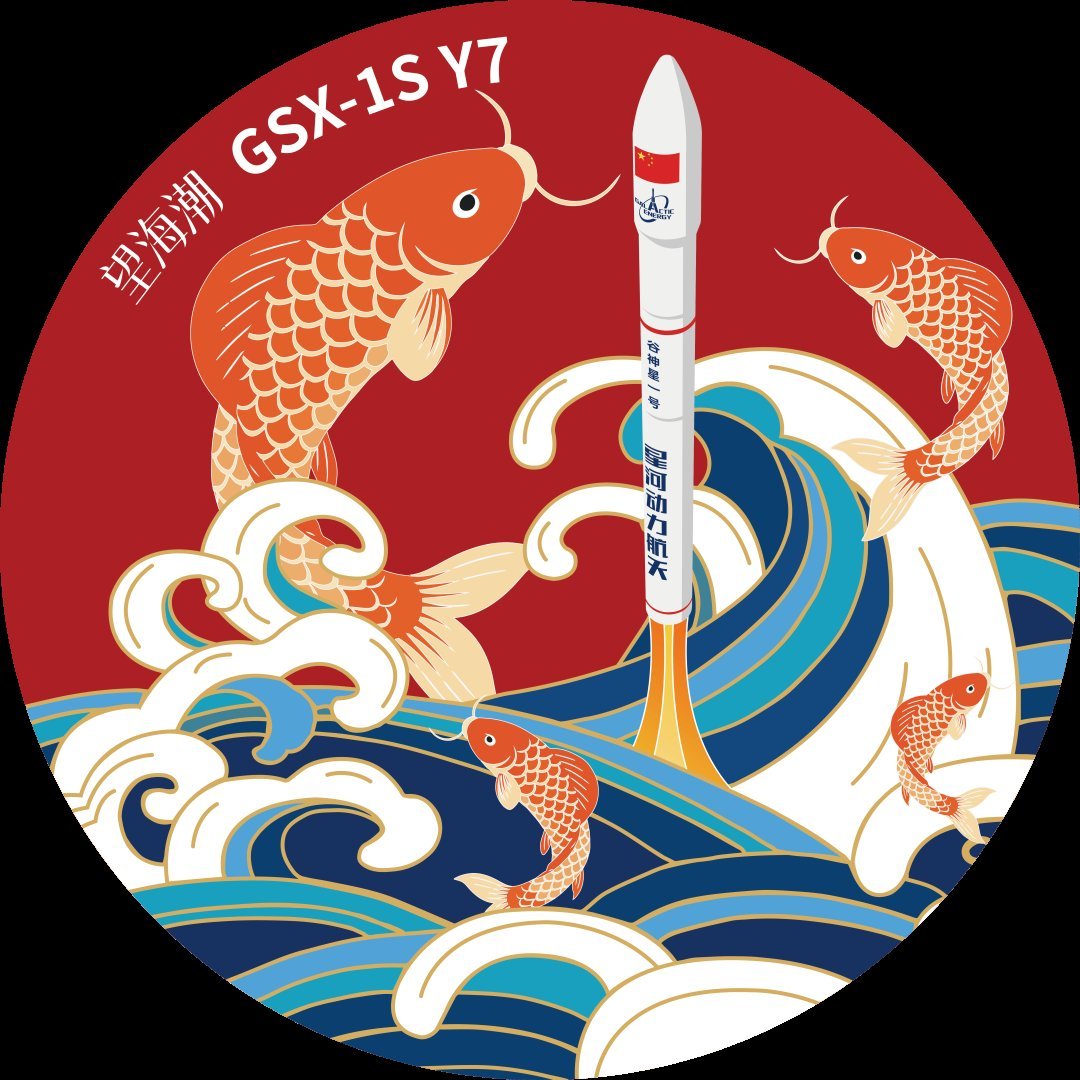
Mission Patch for the Ceres 1S launch of Tianqi 37-40. Image Credit: Galactic Energy.
Back to CASC for a moment, as the often-used Long March 3B/E roared off the pad from LC-2 at the Xichang Launch Center. The payload, Shijian 32 was an “experimental spacecraft, about which almost nothing was known”. However, that information may not be relevant as an issue with the rocket’s third stage caused the rocket to fail, and the payload unable to reach orbit.
One more launch from China, and a demo flight at that. Galactic Energy finally debued their Ceres 2 rocket, with its flight taking place from Site 95A at the Jiquan Launch Center. Unfortunately, the launch failed quickly, following at issue with the rocket’s first stage. “Private” Spaceflight in China is in an interesting spot right now, with a lot of companies up and coming, but right now the king of the industry there seems to be Galactic Energy (and CAS to an extent) and I do not expect this failure to slow them down at all.

Mission Patch for Ceres 2 Demo Flight. Image Credit: Galactic Energy.
Returning to the US we make a stop on the west coast for the launch of NROL-105. This launch of Reconnaissance satellites built by Northrop Grumman went off without a hitch, with satellites being deployed successfully and the booster returning to Vandenberg, landing at LZ-4.
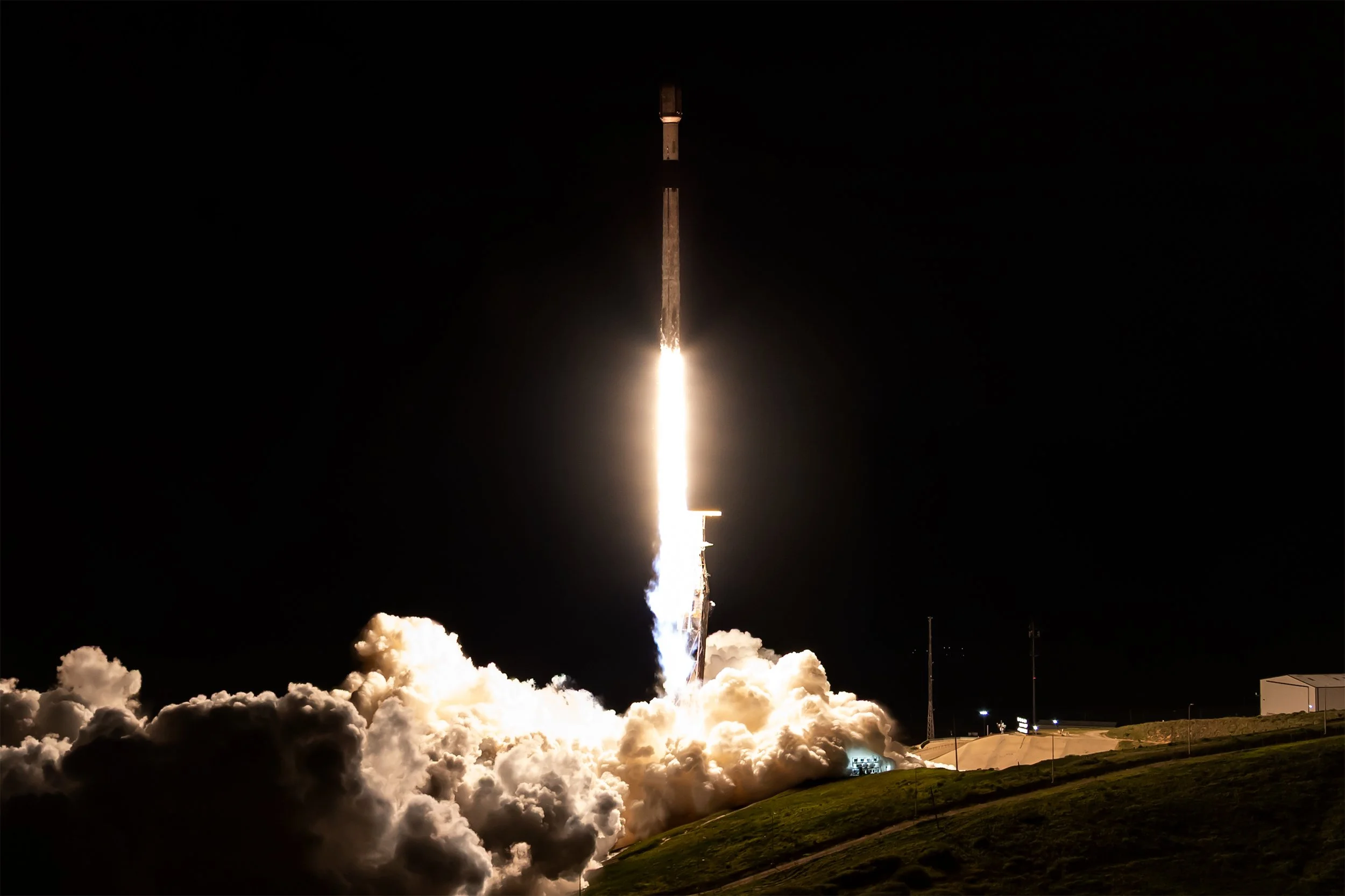
Falcon 9 launches NROL-105. Image Credit: SpaceX.
The final launch of the week takes us back to where we started, SLC-40 at the Cape, for a Starlink Mission. The long-awaited moment, shell 6 hits triple digits, as Falcon 9 carries the 29 satellites of Starlink Group 6-100 to orbit. Following stage separation, the booster returned to earth, touching down on the drone ship “A Shortfall of Gravitas”.
That’s all the launches for the week everyone! As I said, very busy week for China. 6 launches in 7 days, from 6 different rockets, at 5 different launch sites, an even more incredible feat considering China still (though not for much longer) uses entirely expendable rockets. Great week for SpaceX too, Starlink shell 6 hits triple digits, and they hit another record for Falcon’s pad turn around time. Who would have thought we’d be launching multiple rockets from the same pad in less than 48 hours? One final thing that’s worth touching on is that Saturday was the rollout of SLS to LC-39B. The massive moon bound rocket took a roughly 12 hour trip from NASA’s Vehicle Assembly Building to the launch pad. While on the pad teams will conduct a host of tanking, pressure, computer, and mechanical tests, as well as a wet dress rehearsal as the rocket prepares for its first launch window on February 6th. Artemis II is coming soon! All of that being said I hope everyone has a great week, and I will see you back here next week for another installment of The Weekly Rocket Report!
As always feel free to write to me at rickyew2112@gmail.com, or find me on X @Rickyew2112
Sic Itur Ad Astra
(Thus They Journey to the Stars)