Booster 18 is destroyed during testing
Main pic credits to Starship Gazer
On November 20th, SpaceX teams at Starbase rolled out the first next-generation booster, Booster 18, for the first time, rolling it to the Massey’s test site ahead of cryogenic testing… however, less than 24 hours later, it sustained major structural damage during ambient testing, marking a rough start for the Block 3 era.
Booster 18
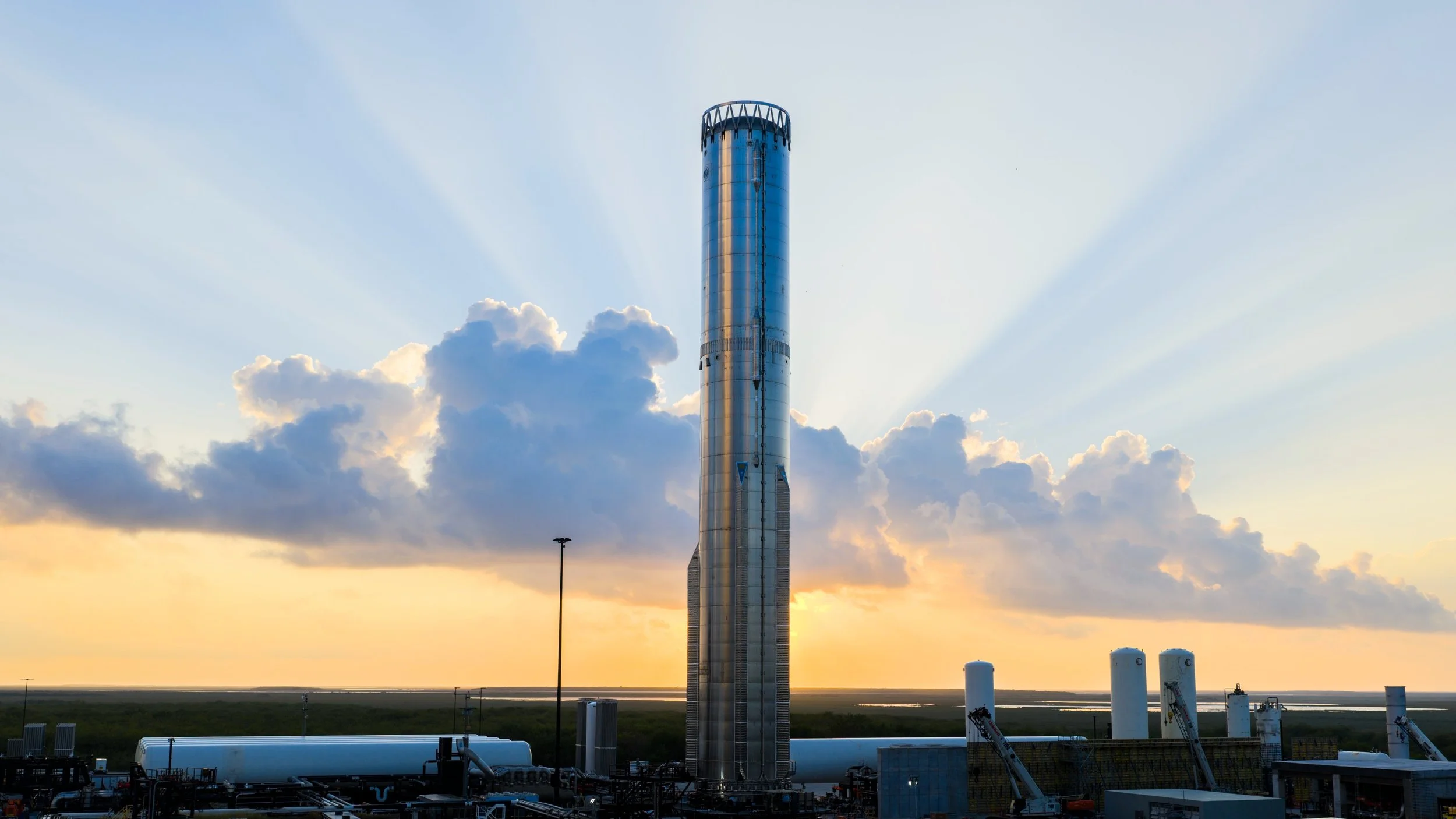
Booster 18 at Massey’s. Credit: SpaceX
Booster 18 is the first Block 3 booster that was completed and rolled out: its stacking took an incredible 170 days, starting in May and finishing just a couple of weeks before its rollout.
Its stacking took this long because they didn’t have all the parts qualified and developed yet, and they still had to wait for data from several test tanks at Massey’s.
After it completed stacking, it was rolled out between the night of November 19th and 20th, giving us the first full detailed view of the vehicle. Several changes were immediately spotted by our eyes, including the redesigned fwd section with the integrated hot staging ring, the redesigned aft section, the new repositioned chines, the new openings for the grid fins, and the new QDs (Quick Disconnects).
These are only a few of the major changes that this version brings, but we will go deeper into those in a later article… here, we are focusing on what happened to this unlucky, short-lived booster.
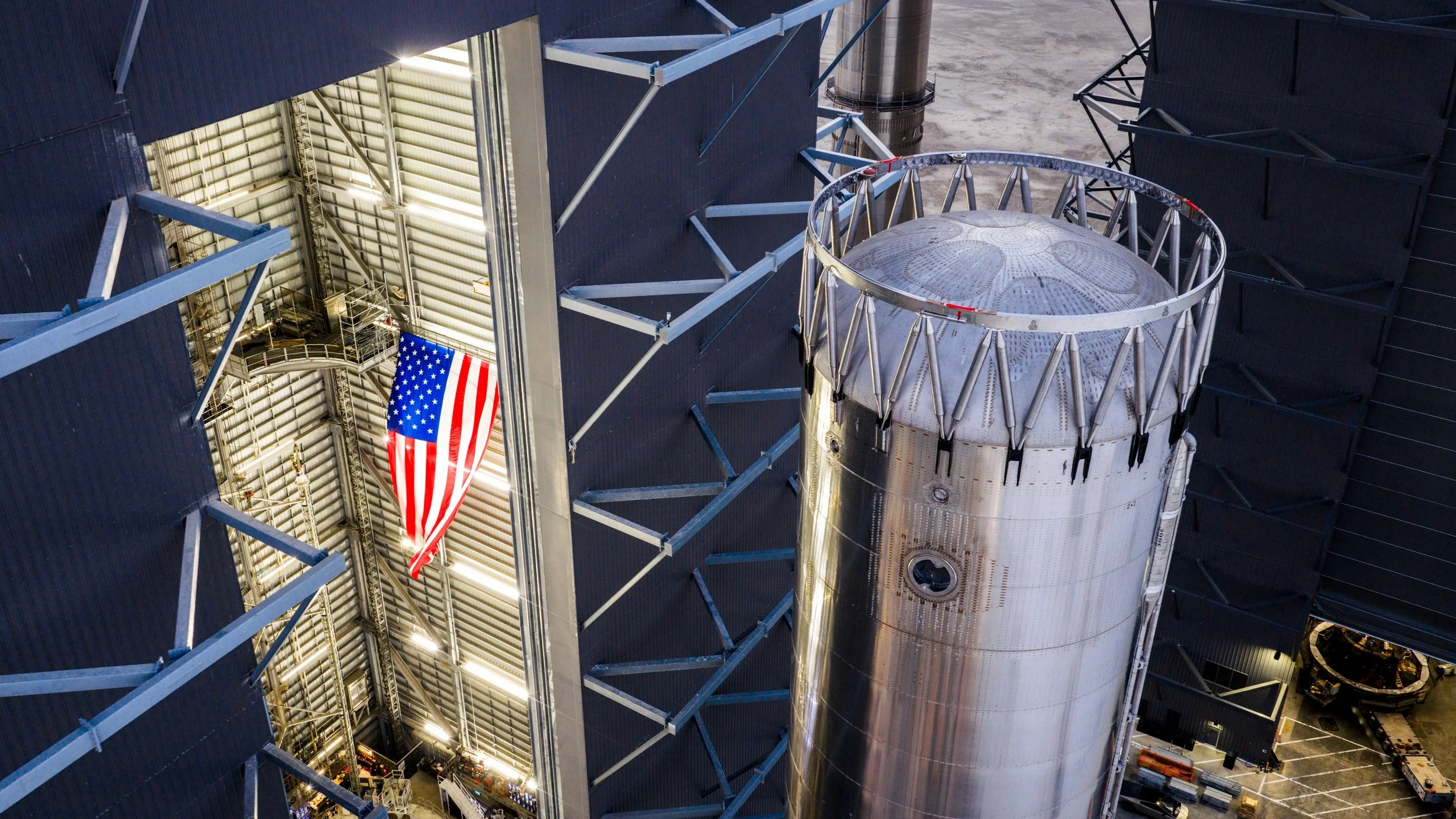
Booster 18’s redesigned fwd section. Credit: SpaceX
After the rollout on the cryo stand, the vehicle was parked at Massey’s, and the lines were connected to its Quick Disconnects: this testing campaign for Booster 18 aimed at getting the first data on the vehicle’s redesigned propellant systems and its structural strength, so it would include several rounds of testing that would mainly include cryogenic testing, where liquid oxygen and liquid nitrogen are loaded into the vehicle’s LOX and CH4 tanks, respectively. This way, should something catastrophic happen during testing, there would be no ignition thanks to using LN2 instead of CH4… we discovered what happens when LOX and CH4 mix during Ship 36’s static fire.
The mishap
Engineers didn’t lose time, and they began testing on the first night after the booster arrived at Massey’s, starting with a simple gas ambient pressure testing… here, the oxygen and nitrogen are loaded in a gaseous state rather than in a liquid state to test pressure on the rocket’s tanks before conducting definitive structural proof testing with the cold liquids.
However, during this testing, at 04:04:55 am, Booster 18’s LOX tank exploded due to overpressure, destroying it and literally opening the tank apart. Even though the Booster was still standing, it was clear that the damage was significant, and this became even more clear when daylight came and we were able to see the real deal: the LOX tank had popped, and the Booster was being structurally supported by the transfer tube only (which is as wide as a Falcon 9). Luckily, there was no combustion due to the nature of the test, and there were no engines installed either since this was not a static fire test.

Booster 18 at Massey’s following the incident. Credit: Starbase Surfer
SpaceX now has to remove the booster from Massey’s, but it’s unclear how they will do that since there’s no way to know the Booster’s structural safety, meaning we don’t know if the booster will be able to be lifted and positioned on the cryo stand. SpaceX seems to be currently planning to use the LR11k crane at Massey’s, so check the operations out in real time thanks to NSF’s and Labpadre’s YT streams.
Now what?
Putting all our cards on the table, things are not as bad as they seem: while we lost a Booster, which likely won’t be salvageable at all, the test site has reported no damage, allowing it to resume operations as soon as needed.
The next Booster in line, Booster 19, hasn’t started stacking yet, but it’s likely that all its parts are already in the Starfactory; it’s unclear whether SpaceX will start stacking the fwd section and the methane tank while they complete the investigation on the LOX tank failure or wait until the investigation is over and changes are implemented. However, this is likely not more than a 1.5-2 month delay.
So when will Flight 12 be? It’s hard to say, but it likely won’t be earlier than February or March, so while we still have to wait a while, we are absolutely ready to watch everything that happens!
References
https://www.youtube.com/watch?v=mhJRzQsLZGg
https://www.youtube.com/watch?v=qw3uaLRrYNY
